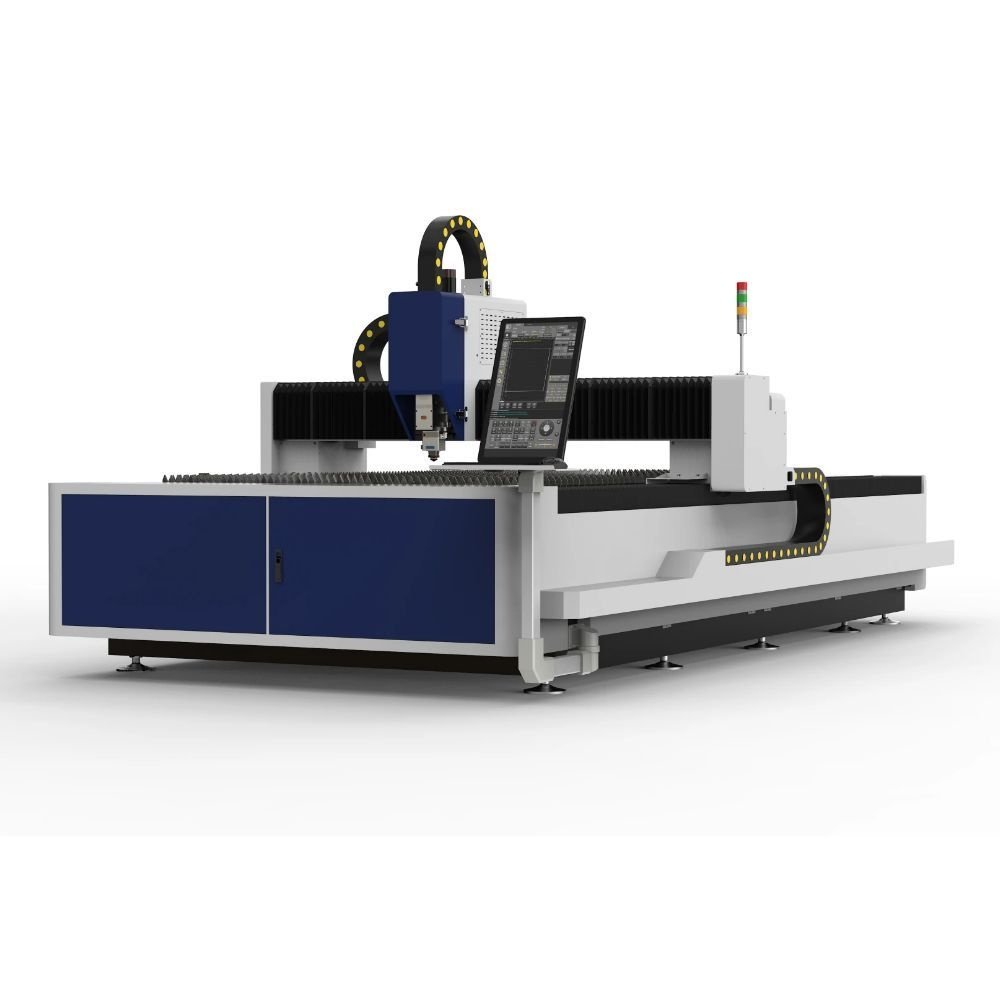
Although the vast majority of laser cutting machine manufacturers are “assembly plants,” there is a huge gap in the stability and service life of the machines they produce due to differences in positioning, materials, manufacturing processes, and quality control.
The key differences and ways to distinguish between high-quality and low-quality machines can be summarized as follows:
一、What are the differences between machines assembled by different manufacturers?
1. Bed Structure and Stress-Relief Processes (Core Hidden Costs)
This is the area where the greatest differences between machines lie.
Leading manufacturers: They use thick steel plates (e.g., 12–20 mm or even thicker) for the welded bed, which must undergo high-temperature furnace tempering (heat treatment) and aging treatment to release the internal stresses generated during welding. This ensures that the bed remains distortion-free even after more than a decade of high-speed operation.
Low-end small manufacturers: To compete on price, they often use thin plates or welded tubing, and may even skip the tempering process, applying only a simple coat of paint to the surface. These machines appear no different when first purchased, but after 1–2 years of use, the bed will undergo micron-level deformation, completely compromising their precision.
2. “Authenticity Rate” and Compatibility of Core Components
Although everyone uses components from brands like Raycus, Max, Cypcut, Wanxin, and E-Bianpate, the industry is quite complex:
Supply Chain Bargaining Power: Major manufacturers source genuine, Grade A core components (such as lasers and cutting heads) directly from the manufacturers.
Low-end Assemblies: The market is flooded with refurbished lasers, Grade B components, or counterfeit guide rails and rack-and-pinion systems (such as those marketed as Taiwanese brands but actually manufactured by small domestic workshops).
3. Assembly Precision and Quality Inspection Standards
Large manufacturers: The mounting surfaces of the guide rails are precision-machined in a single pass using large gantry milling machines; during assembly, parallelism and straightness are calibrated section by section using laser interferometers and collimators.
Small manufacturers: Relying on the experience of veteran technicians and manual adjustments using dial indicators, they lack expensive testing equipment, so assembly precision is entirely a matter of luck.
二、How can you tell the quality of a machine when inspecting it in person?
When visiting a factory or observing on-site prototyping, focus on these four details:
Check the machine’s weight: Inquire about and compare the total weight of machines with the same working area (e.g., the standard 3015 model). With equivalent configurations, a heavier machine is better. A heavier machine indicates thicker steel plates, more internal reinforcing ribs, and greater stability during high-speed operation.
Listen to the noise during high-speed operation: Run the machine in idle mode with acceleration (G-force) set to maximum. Listen for any low-frequency noise, screeching, or vibration from the machine body. A high-quality machine produces a deep, crisp sound during high-speed direction changes, with no excessive shaking.
Inspect the wiring in the electrical cabinet: Open the control cabinet. In a high-quality machine, the wiring is laid out in straight, orderly lines—like in a server room—with all wires labeled and housed in conduit, using highly flexible shielded cables (to prevent signal interference). Low-end machines often resemble a spider web, with wires of varying lengths, making them highly prone to future wire breaks or interference-related errors.
Examine the Cross-Section and Micro-Holes During a Test Cut:
Cut a piece of carbon steel that is at least 10 mm thick and check whether the cross-sectional texture is fine and vertical, and whether there is any slag residue at the bottom.
Cut a small circular hole in a thick plate with a diameter smaller than the plate’s thickness, and check whether the hole is perfectly round. Due to reverse clearance and bed vibration, low-end machines often produce small holes that are elliptical or have sharp corners.