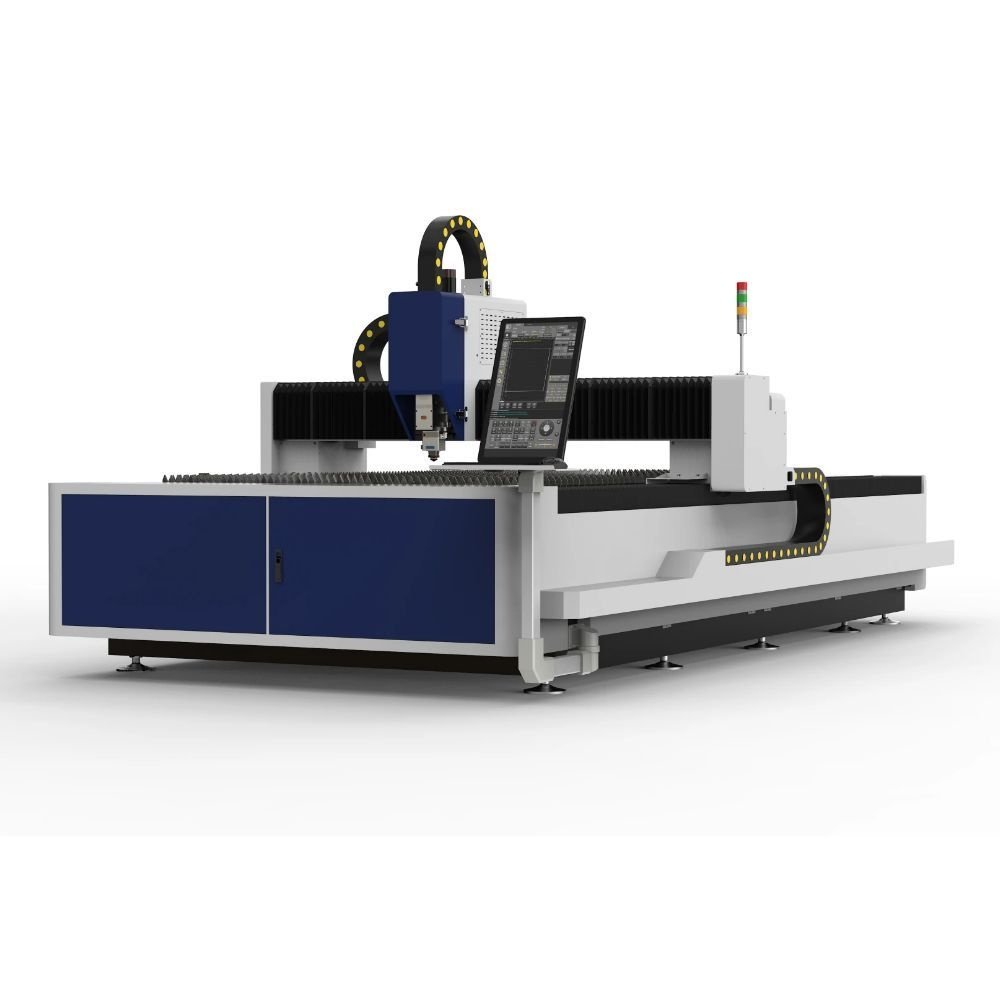

Laser cutting machines have become one of the most important tools in modern manufacturing. From automotive and aerospace to jewelry and signage, these machines are transforming how industries cut, engrave, and shape materials. But what exactly is a laser cutting machine, and how does it work? This comprehensive guide will explain the fundamentals, the technology behind it, its applications, and why it has become the preferred choice for precision cutting worldwide.
Understanding the Basics of Laser Cutting
Definition of a Laser Cutting Machine
A laser cutting machine is an industrial tool that uses a high-powered laser beam to cut, engrave, or mark materials with extreme precision. Unlike traditional cutting methods that rely on mechanical force, laser cutting is a non-contact process, meaning the tool never physically touches the material. Instead, the laser beam melts, burns, or vaporizes the material along a programmed path.
The Science Behind Laser Cutting
The word LASER stands for Light Amplification by Stimulated Emission of Radiation. In simple terms, a laser is a highly concentrated beam of light that carries enough energy to cut through materials. The machine directs this beam through optics and CNC (computer numerical control) systems to achieve precise cuts.
How Does a Laser Cutting Machine Work?
Step 1: Generating the Laser Beam
The process begins with a laser source. Depending on the machine type, this could be:
- CO₂ lasers – using a gas mixture to generate infrared light.
- Fiber lasers – using optical fibers doped with rare-earth elements.
- Diode lasers – compact and energy-efficient, often used in smaller machines.
Step 2: Directing the Beam
The laser beam is guided through a series of mirrors or fiber optics until it reaches the cutting head. Inside the head, lenses focus the beam into a tiny spot, often less than 0.2 mm in diameter.
Step 3: Interaction with Material
When the focused beam hits the material, its energy density is so high that it melts, burns, or vaporizes the surface instantly. Assist gases such as oxygen, nitrogen, or compressed air are often blown through the nozzle to:
- Remove molten material
- Improve cutting speed
- Prevent oxidation
Step 4: CNC Control
The entire process is controlled by CNC software, which follows a digital design file (CAD/CAM). This ensures that every cut is accurate to the micrometer, even for complex shapes.
Key Components of a Laser Cutting Machine
- Laser Source – generates the beam.
- Beam Delivery System – mirrors or fiber optics that guide the beam.
- Cutting Head – contains focusing lenses and nozzles.
- CNC Controller – interprets design files and controls movement.
- Assist Gas System – supplies oxygen, nitrogen, or air.
- Cooling System – prevents overheating of the laser source.
- Worktable/Bed – holds the material in place.
Types of Laser Cutting Machines
CO₂ Laser Cutting Machines
- Best for non-metals like wood, acrylic, textiles, and plastics.
- Affordable and versatile.
- Limited efficiency for thick metals.
Fiber Laser Cutting Machines
- Ideal for metals such as steel, aluminum, copper, and brass.
- High efficiency, low maintenance.
- Increasingly popular in industrial applications.
Diode Laser Cutting Machines
- Compact and cost-effective.
- Suitable for small-scale engraving and light cutting.
- Often used in desktop or hobbyist machines.
Advantages of Laser Cutting Machines
- High Precision – accuracy up to ±0.01 mm.
- Speed – faster than plasma or mechanical cutting for thin materials.
- Versatility – cuts metals, plastics, wood, textiles, and more.
- Complex Shapes – easily handles intricate designs.
- Automation – integrates with CAD/CAM for mass production.
- Minimal Waste – narrow kerf width reduces material loss.
Limitations of Laser Cutting Machines
- High Initial Cost – especially for fiber lasers.
- Material Thickness Limits – not ideal for very thick steel.
- Energy Consumption – though fiber lasers are more efficient.
- Safety Concerns – requires protective equipment and enclosures.
Applications of Laser Cutting Machines
Automotive Industry
Used for cutting car body panels, exhaust components, and intricate parts.
Aerospace Industry
Essential for cutting lightweight alloys and composites with extreme precision.
Electronics
Used in PCB manufacturing, micro-cutting, and engraving.
Medical Devices
Creates surgical instruments, stents, and implants with high accuracy.
Jewelry and Fashion
Enables fine engraving and cutting of precious metals and fabrics.
Signage and Advertising
Cuts acrylic, wood, and plastics for custom signs and displays.
How Accurate Is a Laser Cutting Machine?
Laser cutting machines can achieve tolerances as tight as ±0.01 mm, making them far more precise than plasma or mechanical cutting. This level of accuracy is why industries like aerospace and medical rely heavily on laser technology.
Safety Guidelines for Operating a Laser Cutting Machine
- Always wear laser safety glasses.
- Ensure proper ventilation to remove fumes.
- Never leave the machine unattended during operation.
- Regularly inspect and clean lenses.
- Follow manufacturer’s maintenance schedules.
Future of Laser Cutting Technology
The future of laser cutting is moving toward:
- Higher power fiber lasers for faster cutting.
- AI-driven automation for predictive maintenance.
- Integration with Industry 4.0 smart factories.
- Eco-friendly solutions with lower energy consumption.
Conclusion
A laser cutting machine is more than just a tool—it’s a revolution in precision manufacturing. By using concentrated beams of light, these machines can cut, engrave, and shape materials with unmatched accuracy and speed. Whether in automotive, aerospace, medical, or creative industries, laser cutting is setting the standard for modern production.
For businesses, investing in a laser cutting machine means higher efficiency, reduced waste, and the ability to meet growing demands for customization and precision. As technology continues to evolve, laser cutting will only become more powerful, accessible, and indispensable.